It was a quiet Saturday morning. I was up late the night before watching the end of March Madness’s Round of 64, yet somehow I was still the first one awake.
Naturally, I fired up the Apple TV and started looking for a movie to watch. What better way to enjoy my morning coffee + laundry combo?
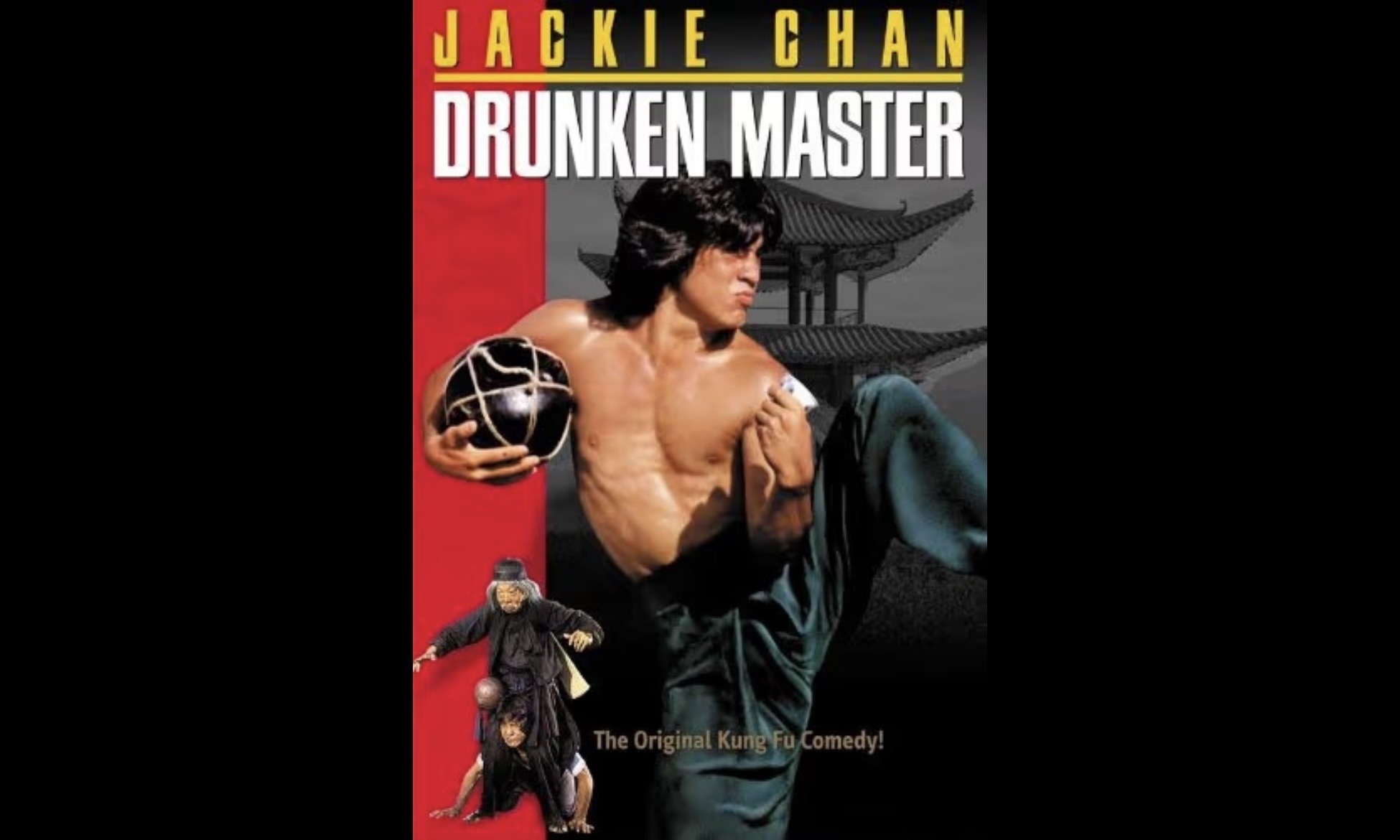
I found Drunken Master with Jackie Chan on Tubi—one of his earliest breakout films and definitely a movie I wasn’t allowed to watch as a kid.
I was hoping to find the original Cantonese dub on Tubi, but beggars can’t be choosers. I ended up appreciating it more than I thought because the English dub was hilariously bad in some parts and gave me a few good laughs. It reminded me of watching Bruce Li movies with my dad growing up, laughing at how the actors’ lips would move even after they were finished speaking.
But finding Drunken Master was more than just a whacky Saturday morning movie—for me, the 1978 film was a rediscovery.
As it turns out, Drunken Master is a prime example of what it looks like to master your craft and turn it into something the world can admire and enjoy.
The Craft Beneath the Chaos
I have to start by acknowledging the movie’s technical accomplishments.
I think sometimes the level of commitment and artistry that goes into making a movie can get lost in production, treated like an expectation that doesn’t necessarily reflect quality but still earns a kind of participation trophy.
It’s something we search for yet rarely appreciate once we find it. If it isn’t there, we complain. But if it is, then it’s just… good, because the movie set the expectation that it would be there in the first place.
That’s what makes Drunken Master stand out to me. The amount of work it took to make this movie must have been astounding, and yet it never feels like it’s asking for credit. It just moves, fights, stumbles, and jokes with a kind of quiet confidence, like it knows exactly how much effort went into every second and doesn’t need to prove it.
If you want a quick history lesson, Drunken Master is built on Zui Quan, a real and deeply rooted style of martial arts that mimics the off-balance sway and unpredictable rhythm of someone intoxicated. The film also pulls inspiration from the legendary Eight Immortals, giving each “drunken god” a distinct personality that bleeds directly into how they move and fight.
What makes it feel so original is how choreographer Yuen Woo-ping transformed those influences into something hyper-specific to the film.
Each style isn’t just a variation in technique—it’s a character in motion, complete with its own rhythm, posture, and attitude.
Movements stretch, snap, and stumble in ways that are clearly designed for the camera, not just for combat. Some sequences even feel like they exist purely to land a joke, where the choreography bends itself around timing and surprise rather than realism.
An authentic foundation that gives itself room to breathe (and laugh). It’s more like folklore and martial arts got tossed into a cinematic shaker and poured out with flair.
Drunken Master has more kung fu sequences than any other martial arts movie I can recall seeing. It takes an unbelievable amount of time and commitment to curate a form of martial arts that’s unique and serves the story of the movie.
Honestly, it almost makes me want to build a drink to match. To entertain a tangent in lieu of my podcast Sipping On Cinema with Bethanne Ciaccio-Tarpley, I’ve been thinking about a rice wine cocktail, lightly sweetened and punctuated with lychee or a touch of ginger—something that starts smooth and traditional but finishes playful and unpredictable, just like the movie itself. A toast to the Eight Immortals, to Jackie Chan, and to movies that dance between mastery and mischief.
But that’s the magic trick the movie pulls off so effortlessly. It doesn’t invent entirely new martial arts systems; rather, it reshapes what already exists with so much personality that it might as well have.
The result is a kind of cinematic kung fu that lives in its own lane, where tradition meets playfulness and precision dances with chaos.
It’s not just about fighting styles; it’s about expression, and that’s a big part of why it sticks with you long after the final scene.
The Charm of Imperfection
Now, when it comes to comedies in the 1970s, there’s gonna be a little bit of cringe. It’s just what happens when culture is allowed to continue aging and evolving for half a century while a movie like this remains as it was when it was the latest-and-greatest thing on the scene.
And I don’t like to use this blog to rant about actors that are overly eager or classically untrained, because I’m often both of those things when it comes to what excites me most.
Plus, this is what I consider to be one of the movie’s roughest edges, which can actually speaks to the novelty and passion behind each contributing performance. Can’t complain about that.
I look at this quality as more of a flavor than a flaw, like a crackle in a vinyl record that makes it feel alive. You don’t get those crackles on Spotify, so it’s up to you whether the movie vibes with your comedic style.
The Dub Experience — Then vs Now
I mentioned the 70s English dub, and I do have to say, just once more, that it was the most distracting part of the film for me. It just seemed like too much. They could’ve shaved a good 20-30% of the dialogue from this movie’s English version and they wouldn’t have lost much.
The challenging part is that I don’t know whether that’s true for the original audio.
I think that maybe some of the lines were translated a bit too directly, making some conversations sound more like a repetitive reading than a living, breathing dialogue.
I don’t watch too many movies that are dubbed in another language, mainly because I’d rather just watch the original film with subtitles than listen to an audio track that often wasn’t even put together by the original filmmaker.
It may seem a bit out of left field—especially in this context—but The Passion of the Christ is the first movie that comes to mind when I think of this. I still have never watched the English dub because I just don’t think I’d be able to immerse myself in the story enough to appreciate it.
Mel Gibson put so much of the movie’s effort into getting the language right—why would I disregard that part of the project when it was the filmmaker’s intent to use it to help tell the story?
Plus, I don’t think there’s a better example of controversial translations than the Bible. Best to stick with the version where the guy spent some serious resources to make sure he was being as accurate as possible.
But there are still movies that rely on the English version to reach wider audiences.
For instance, I remember watching RRR on Netflix back in 2023, and although I did make a note to go back and watch it again in its original language, watching the three-hour movie in a dubbed version wasn’t nearly as distracting. It was like they took the time to ensure everybody’s lips lined up with the words, even if they weren’t speaking the same language.
When the Predator prequel titled Prey came out a few years back, they released the English version and the Comanche dub together on Hulu. I wanted to watch it in the Comanche dub first because I thought it would add an extra layer of authenticity. I was 100% right.
All this to say that the movie industry has done a lot in the last 50 years to improve dubbing, and Drunken Master helps me appreciate that.
(I feel like there’s a particular type of danger in giving a backhanded compliment to a Jackie Chan movie. Guess we’ll have to find out.)
However, the dubbing did add another memorable element that had its own charm and nostalgia baked in. I wouldn’t mind watching the English dub again once my son is ready to see this film.
Jackie Chan: The Bridge Between Art and Joy
Ultimately, I think Jackie Chan can motivate me to fight for any movie he’s involved in. His seemingly natural inclination to use his body to elicit both wonder and joy is rare, and to add on comedy as a top layer is always a treat.
Jackie Chan consistently blends his mastery of the martial arts with his comedic timing to deliver a performance that’s as precise as it is preposterous.
From early hits like Drunken Master and Police Story to more modern classics like Rush Hour and Shanghai Noon, Jackie’s ability to make viewers laugh while also being amazed is a high cinematic standard at which he’s never struggled to succeed.
The industry knows this and continues to tout Jackie as one of the greatest to ever do it.
It’s wild to think that the same creative instincts on display in Drunken Master eventually grew into something as influential as the Jackie Chan Stunt Team, but it makes sense to me. What started as a group built around trust, timing, and a willingness to push physical storytelling further than most productions would dare has become one of the most respected action choreography units in the industry.
And Jackie Chan didn’t just carve out a lane for himself; he built the road and then handed out the blueprint. His approach to action, where every hit, fall, and stumble carries intention and character, has quietly reshaped how filmmakers think about fight scenes, not just as spectacle, but as storytelling.
That influence is still echoing today in a big way. With Marvel bringing in his team to help craft the action for Spider-Man: Brand New Day, you can feel that legacy reaching across generations and genres.
Jackie Chan choreographing stunts for a Spider-Man movie. I get chills just thinking about it.
One of the biggest film franchises in the modern age is still asking Jackie to help make the fight scenes something to remember.
It’s not just a nod to his history—it’s an acknowledgment that what he helped pioneer still sets the standard. There’s something poetic about that, seeing the DNA of those earlier films—the creativity, the precision, the playfulness—continue to show up in modern blockbusters. It reinforces the idea that what felt special in Drunken Master wasn’t just lightning in a bottle. It was the foundation of something that the industry is still building on today.
Why Kung Fu Comedy Hits Different
There are a lot of good action films out there that I love. And there are a lot of great comedy movies, too. Anchorman is a great comedy, but only one punch is thrown and it’s a sissy one at best. The same can be said for a lot of comedy movies that double as action thrillers like Men in Black, The Other Guys, and The Heat.
At the other end of the spectrum, Mission Impossible is one of the best action film franchises in history. But every time it tries to tell a joke, it comes with major boomer vibes.
These movies all strive to be funny and exciting, but they usually favor one side more heavily than the other. Nothing beats the right fusion of exciting fights + funny quips, when precision meets playfulness and the jester is also the master.
Drunken Master is exactly that type of perfect blend, letting you marvel at the physical wonder of Jackie’s mastery of the martial arts while also allowing you the space to laugh at his ability to make a fart joke actually seem funny.
Can you see why Jackie’s involvement in the new Spider-Man movie is so exciting?
Passing the Torch
I love my son’s laugh. When I can get him to giggle, it’s the best thing in the world. I would be striking gold if Jackie Chan can make my son laugh, too, because that man is on my screen more than almost anyone else.
There’s no question that Jackie Chan will be one of the first movie names that my son learns (he’s currently 4 months old and has already sat through all the Rush Hour movies).
When it comes to Drunken Master, I can’t wait to show it to him. Sure, I should wait till he’s old enough to understand that “fighting like a drunken idiot makes you smart” is not the lesson to take away from the film. And yes, I probably also need to consider how many times he’ll try to double-kick me or spray water from his mouth after watching this, but I think it’ll all be worth it.
Drunken Master is a testament to who Jackie Chan is as an entertainer. Being one of his earliest breakout roles, Jackie made a statement in the industry with Drunken Master that said he was there to laugh and to love, to balance being fierce with being funny, to foster joy through both jump-kicks and jokes.
And I can’t lie, I love the idea of being the dad that knows the funny kung fu movies from back in the day. Jackie Chan and the Drunken Master will be a recommendation that I know my son will come to know as soon as possible.