It’s been awhile since I wrote anything about movies, but this is worth talking about.
I’m a new dad now, which has been an adjustment to say the least. Most of my writing doesn’t escape my Notes app these days, and I’ve only been to a movie theater once in the last 6 months. Things are different now, but that’s part of the reason I felt motivated to write about this.
When I did get a chance to go to the movies last month, it was at an AMC, an establishment that has long been the epicenter and the trendsetter of the modern movie-going experience. Lately, though, the face of the industry is hurting as AMC’s stock fell to an all-time low.
Despite this, I had the best experience I’ve had at a movie theater in years when I went to this AMC.
So why is it that AMC is struggling when people who love going to the movies are still loving it?
The Average Theater Has Lost Its Luster
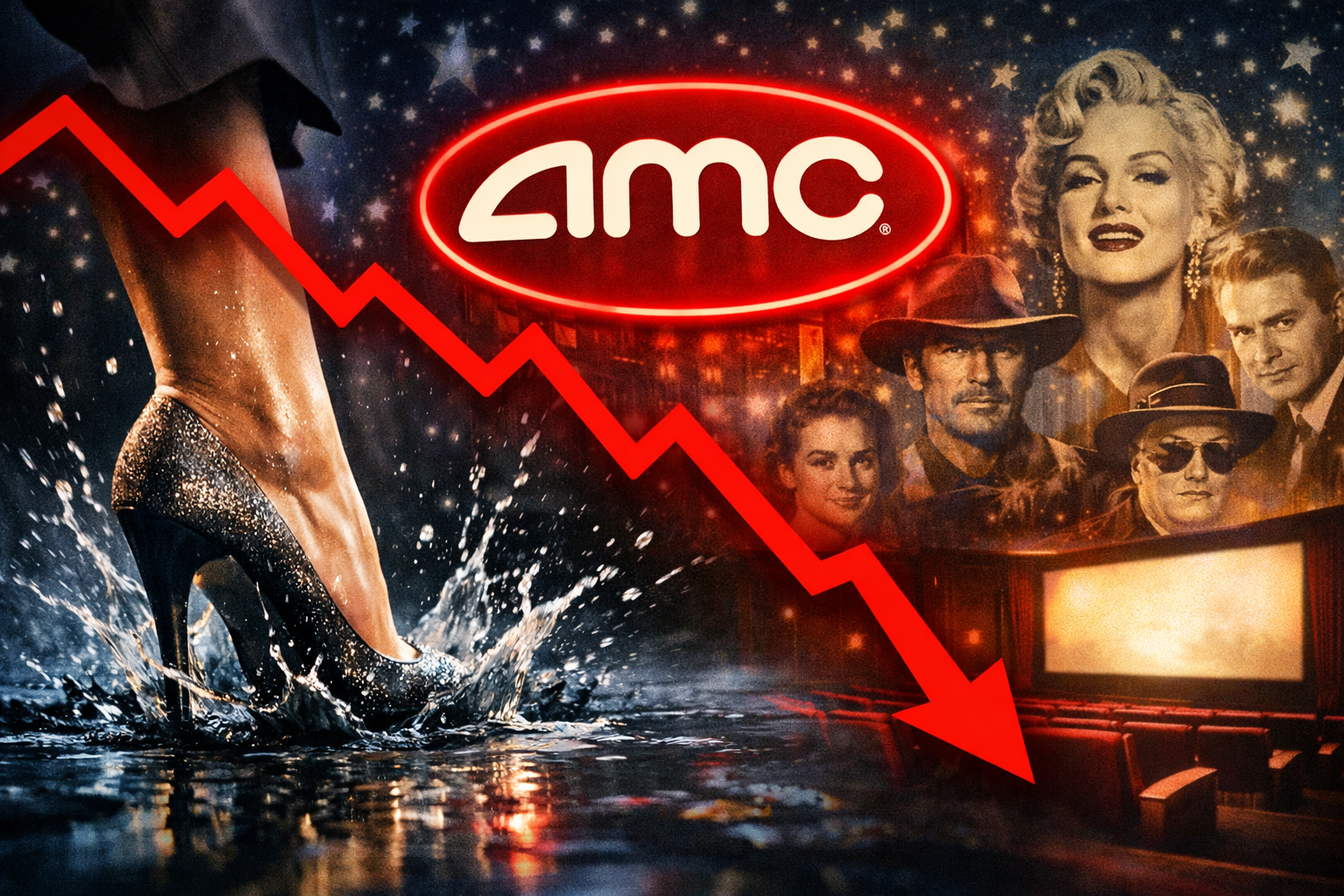
By now, Nicole Kidman has told us all the same thing, dozens of times, with the calm certainty of a spell being cast: heartbreak feels good in a place like this. The lights dim. Her heel hits the puddle. The magic happens.
Except sometimes, it doesn’t.
At my local AMC in Naperville, the movie sometimes doesn’t even play. So they restart it and try again. And again, and again. Which means we watch that Nicole Kidman intro four times in a row.
This is a real story of my first time seeing Thor: Love and Thunder with my wife a few summers ago (we probably should’ve taken the hint and saved ourselves a couple hours).
Each restart brought louder groans, timed perfectly with that infamous heel splash, as a packed theater waited to watch Thor 4: More Thor. That movie carried enough disappointment on its own; it didn’t need the help of a theater that took 30 minutes to show ads and then another 20 minutes to start the movie.
Another time, opening weekend for Black Panther: Wakanda Forever, we sat down, excited, and watched… Black Adam. For ten full minutes. No one said anything at first. People looked around, confused, checking tickets, whispering. Then a few people left. It was surreal. Eventually someone noticed. The movie stopped. The room reset.
Magic, apparently, had wandered into the wrong theater.
These moments are funny in hindsight, but they also felt revealing. Because if this is where the magic happens, why does it feel like no one is tending the fire?
I’ve written about the decline of the movie-going experience before, sharing my personal experiences at the theater and how it’s changed over the years. But now we’re seeing the industry reach a new low—literally—as AMC’s stock just dropped to the lowest it’s ever been.
This isn’t investing advice. I’m not qualified to give it, and that’s not what this is about. Instead, I’m interested in what AMC’s struggling stock price might reflect about the broader movie theater industry and its ongoing struggle to redefine itself in an age of streaming, debt, and distraction.
AMC’s stock has become cheap financially. But more interestingly, it’s begun to feel cheap culturally.
AMC isn’t just a company. It’s the most recognizable face of movie theaters in America. When people imagine “going to the movies,” they’re probably imagining an AMC, whether they realize it or not. So when its stock hits new lows, it doesn’t just register as a business story. It feels like a referendum on the theater experience itself.
The Theater Is No Longer the Default
Going to the movies used to be the first stop. Now it’s an option. One that has to compete with home setups, streaming libraries, exhaustion, and adult schedules that don’t leave much room for spontaneity.
I know this because I tried subscribing to AMC’s Stubs A-List program. On paper, it’s a great deal. For one month, we absolutely got our money’s worth. After that, my wife and I found ourselves paying $25 a month (each) and barely making it to a single screening.
Not because we didn’t want to go. Because life kept happening.
I’ve talked about this before. Long workdays. Full calendars. The mental math of whether a two-and-a-half-hour commitment plus travel time plus tickets plus concessions was realistic that week. The subscription assumes a version of modern life where free time is abundant and predictable. For many people, it just isn’t like that anymore.
That isn’t a lack of love for movies. It’s friction.
Blockbusters Aren’t Stability
Big movies still hit. Opening weekends still explode. But those moments don’t create consistency. One packed screening doesn’t fix weeks of emptier theaters, and it doesn’t restore confidence that the experience will be worth repeating.
It’s like judging a film by a single incredible scene. You remember the moment, but it doesn’t save the whole runtime.
When the Experience Depends on the ZIP Code
What makes this more frustrating is that AMC knows how to do it right.
The Oakbrook AMC in the Chicagoland area is stunning. Compared to the older, rundown AMC that’s closer to me, it feels like stepping into a different era of care in Oakbrook. The contrast is almost staggering. Worn interiors and technical hiccups on one end. Intention, design, and atmosphere on the other.
I felt this most vividly at the 25th anniversary screening of Return of the King at the Oakbrook AMC. That’s the one movie I’ve gotten to see in a movie theater since last summer. Not a bad choice, right?
When we approached the theater, the mural of movie stars in the entryway stopped me in my tracks. It shined through the giant windows, capturing decades’ worth of cinematic history and reaching a diverse group of moviegoers with its iconic cast. Jackie Chan in Rush Hour deserves to be honored like this, and hopefully younger generations will watch him in it thanks to this mural.

The quotes on the walls immersed me even deeper in my theatrical trance:
“Go ahead, make my day!”
“I see dead people.”
“I’m a dude, playin’ a dude, disguised as another dude!”
It had that special element that said movies mattered and meant something. If you can remember walking into a Blockbuster or Hollywood Video and being pleasantly overwhelmed with options, while at the same time being immersed in a world of fan-favorite flicks—it felt like that.
That night reminded me why theaters mattered in the first place. The magic wasn’t gone. It was just selective.
And that’s a problem. When quality varies that wildly, audiences learn not to expect wonder. They hope for it, sure. Sometimes they’re rewarded. Often they’re not.
Hope, as it turns out, isn’t a great long-term strategy when it comes to the theater experience.
You Can’t Phone In the Magic
The Nicole Kidman intro insists the magic simply exists at the movies. But magic doesn’t show up on its own. It needs conditions. Maintenance. Care. A sense that someone behind the curtain still believes in what they’re presenting.
You can’t run ads about wonder while projectors misfire, screens show the wrong movie, and older locations quietly decay. At some point, the contradiction becomes the story.
What the Stock Is Really Reflecting
AMC’s financial struggles add another layer of weight. Heavy debt, tough decisions, and survival-first moves have made even good news feel fragile. So the stock reflects more than numbers. It reflects hesitation.
Hesitation about whether theaters can still be special.
Hesitation about whether the experience will justify the effort.
Hesitation about whether nostalgia and modern life can coexist.
People still love movies. That part hasn’t changed. What’s changed is how much stands between that love and the act of showing up, and what theaters are willing to invest to make the experience worth jumping over the hurdles to get there.
The Marquee Still Matters
The magic still works. I felt it watching Return of the King under a ceiling of stars. The lights dimmed. The room settled. A story bigger than all of us unfolded exactly the way it was meant to.
But moments like that don’t happen by accident.
If AMC’s stock is a mirror, what it reflects isn’t just financial stress. It reflects an industry caught between survival and reinvention, between slogans and substance.
You can’t just tell people the magic is there.
You have to make room for it to happen.