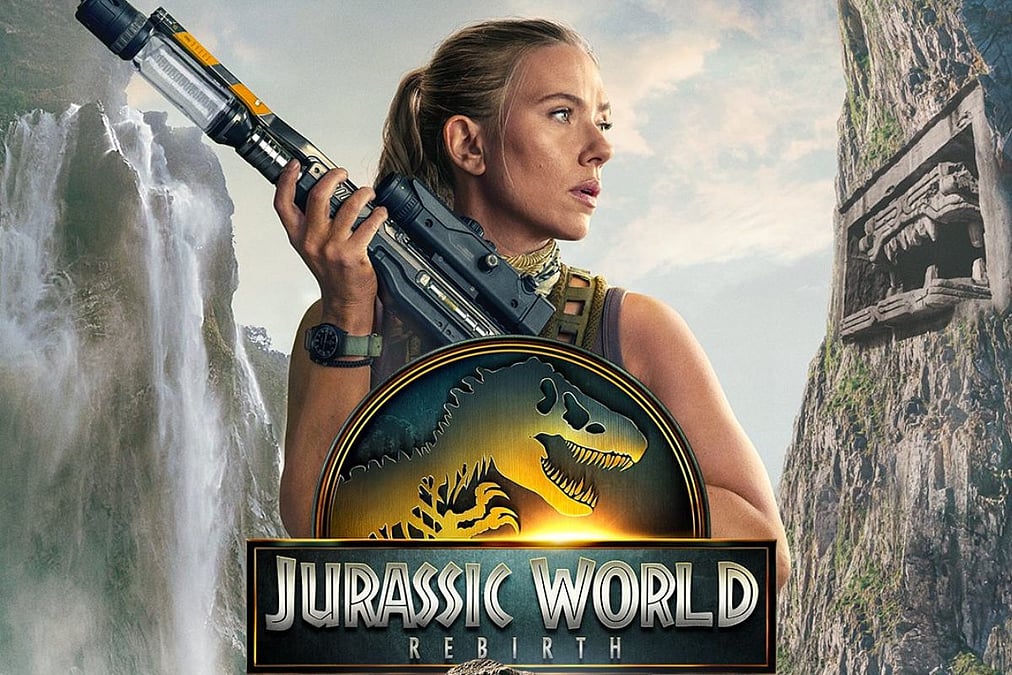
Jurassic Park is so back.
Not just the branding. Not just the dinosaurs. But the feeling. That elusive Spielbergian mix of awe, suspense, and grounded humanity that made the original 1993 film a masterpiece of blockbuster cinema.
Jurassic World: Rebirth doesn’t just try to revive the franchise—it succeeds by remembering what made it great in the first place. And for the first time since the original trilogy, it actually feels like we’re back in the world that made us fall in love with dinosaurs.
Nostalgia With Purpose
This movie checks all the classic boxes—yes, there’s a T-Rex chase, yes, there are velociraptors stalking humans in a claustrophobic space—but none of it feels lazy. It doesn’t coast on iconography like the last couple of Jurassic Worldfilms did. Instead, it earns those moments by rebuilding the foundation. The film strikes a genuine balance between nostalgia and innovation, delivering something that feels fresh and familiar.
Even better? It finally shakes off the emotional and tonal flatness of the previous three Jurassic World entries. Those films had the structure and the spectacle, but they couldn’t quite recapture the soul. Rebirth finally does.
Dinosaurs as Co-Stars, Not Set Dressing
By the way—if you didn’t know, Jurassic World: Rebirth marks Steven Spielberg’s most hands-on involvement with the franchise since the original trilogy. While he’s been credited as an executive producer on every Jurassic World film since 2015, his role in those earlier entries was largely ceremonial, offering little-to-no creative input. This time, he worked closely with David Koepp—the screenwriter behind Jurassic Park (1993) and The Lost World (1997)—to shape the story from the ground up. That reunion of original creative minds is a big reason Rebirth captures the tone, wonder, and character depth that’s been missing for decades.
One of the biggest standouts here is how the dinosaurs are treated. In Rebirth, they’re no longer just CGI hazards sprinkled into action scenes—they’re present, tactile, and integrated into the characters’ environment in ways that build tension and drama. Some of this is due to much more convincing practical effects, or at least practical elements blended masterfully with digital ones.
It brings to mind something Steven Spielberg has always done best: treating non-human elements with reverence, gravity, and character. The dinosaurs feel like co-stars again, not pixelated background chaos.
And I really appreciated that the film introduced new mutated dinosaurs without bogging us down in a half-hour of explanation. We’re simply told early on that a lab has been mutating them, and then we get to spend the rest of the movie discovering them—making each reveal more surprising and engaging.
Whether it’s a predator stalking a darkened store or a herd grazing in silence, Rebirth knows how to frame them in a way that makes us care.
Smart Tech, Smarter Writing
There’s a clever mix of new technology in this one, especially a tool for retrieving dinosaur DNA that’s both original and cinematic. Without giving anything away, it’s one of several pieces of tech that feels believable while still sparking the imagination. Even when the devices stretch plausibility a bit (really, I just can’t believe how reliable it was), the creativity is refreshing and fun.
But where this film really shines is in the writing. The character work is far more three-dimensional than in recent installments. Gone are the generic archetypes—Action Hero™, Smart Kid™, Evil CEO™—and in their place are people with genuine flaws, personal stakes, and emotional arcs.
The film echoes the original Jurassic Park by grounding its spectacle in character. The awe doesn’t come from seeing a dinosaur on screen—it comes from seeing the characters respond to that dinosaur in a way that feels human and earned.
Wonder, Earned
There’s a standout moment—no spoilers—where the characters observe a species of massive herbivores up close. It’s a quiet scene. No explosions, no chase. Just awe. It mirrors the tone of the original brachiosaurus scene from 1993, but instead of trying to replicate the moment beat-for-beat, it earns it through the characters’ eyes. You feel their wonder because you believe in their journey. That’s the Spielberg magic: emotion through perspective, not just presentation.
A Note on the Score
My only real gripe? The music. It’s time to evolve.
As beloved as John Williams’ original score is—and it’s truly iconic—it’s been recycled nearly note-for-note in six consecutive movies.
Rebirth injects so much new life into this franchise; it’s a shame the score didn’t rise to meet that innovation. A reinterpretation or even a new motif would’ve gone a long way in reinforcing the film’s fresh identity.
Final Thoughts
Jurassic World: Rebirth is the rare legacy sequel that gets it. It understands its roots without being shackled by them. It brings new characters, new ideas, and new tension to the table while honoring what came before with genuine care. For longtime fans, it feels like coming home—for new viewers, it might finally answer the question: What’s the big deal about Jurassic Park, anyway?
My favorite part? It hardly relies on any of the previous 3 installments of Jurassic World, which spent way too much time trying to make audiences care about an original idea that really wasn’t all that interesting after 90 minutes of screen time.
Here, they told an isolated story, and left the before and the after more open-ended, not wasting time or energy trying to explain away the greater implications of the story.
Rebirth isn’t perfect, but it’s easily the most exciting and emotionally resonant entry since the original trilogy. If this is the future of the franchise, then the world of dinosaurs on screen might finally have something to say again.